Ever wondered why some cheeses are creamy and others are firm? The secret often lies in a seemingly small detail: how the curds are cut. This guide, “How to Cut the Curds to the Right Size and Why It Matters,” unveils the critical role curd size plays in transforming milk into delicious cheese, from the texture on your tongue to the flavors that develop over time.
We’ll explore the science behind curd formation, the tools you’ll need, and the techniques that will help you achieve the perfect curd size. Learn how different milk types and cheese styles influence the ideal curd dimensions, and troubleshoot common mistakes. Get ready to elevate your cheesemaking skills!
The Importance of Curd Size
The size of the curds you create is arguably the most crucial factor influencing the final characteristics of your cheese. From the texture you experience on your palate to the way flavors develop over time, curd size sets the stage for everything that follows in the cheesemaking process. Mastering this aspect is key to consistently producing high-quality cheese.
Curd Size and Texture
The texture of cheese is fundamentally determined by the size of the curds. The smaller the curds, the more whey is expelled during the cheesemaking process, leading to a firmer, drier cheese. Conversely, larger curds retain more moisture, resulting in a softer, more open-textured cheese. This relationship is central to understanding and controlling the final product.
- Small Curds: Produce cheeses like Parmesan or Cheddar. The extensive whey expulsion leads to a tight, dense structure and a firm texture. Imagine the tightly packed, almost crystalline texture of a well-aged Parmesan.
- Medium Curds: Suitable for cheeses like Gouda or Monterey Jack. They retain a moderate amount of moisture, creating a semi-firm, relatively smooth texture.
- Large Curds: Result in soft cheeses like Brie or Camembert. The higher moisture content creates a creamy, spreadable texture. Think about the luscious, melting quality of a ripe Brie.
Curd Size and Moisture Content
The amount of moisture retained within the cheese is directly linked to curd size. This moisture level not only affects texture but also influences the cheese’s aging process and its susceptibility to spoilage.
The smaller the curd, the less moisture retained; the larger the curd, the more moisture retained.
This fundamental principle guides cheesemakers in achieving the desired moisture content. For instance, the production of a hard cheese, like Swiss, requires significantly smaller curds to expel as much whey as possible, thus reducing moisture and promoting longevity. Conversely, a soft cheese, like fresh mozzarella, relies on larger curds to trap moisture, creating its characteristic soft and pliable texture.
Curd Size and Flavor Development
Curd size impacts flavor development during the aging process, primarily through its influence on the rate of whey expulsion and the subsequent interactions between the cheese components. The moisture content, influenced by curd size, provides a medium for enzymatic activity and the growth of beneficial bacteria, both critical for flavor creation.
- Smaller Curds: Promote a faster rate of whey expulsion, leading to a more concentrated environment for the remaining milk solids. This can accelerate flavor development, often resulting in more intense flavors in aged cheeses.
- Larger Curds: Result in a slower rate of whey expulsion, which can moderate flavor development, contributing to a more subtle flavor profile, typical of some softer cheeses.
For example, the intense, nutty flavor of a well-aged Gruyère is a result of the tight curd structure (small curds) and the concentrated environment that allows complex flavor compounds to develop over time. Conversely, the milder, more delicate flavors of a young, fresh cheese like ricotta are influenced by the larger curd size, which retains more moisture and slows down flavor development.
Consequences of Improperly Sized Curds
Incorrect curd size can lead to a variety of undesirable outcomes, impacting both the texture, flavor, and shelf life of the cheese. Understanding these potential issues emphasizes the importance of precision in the curd-cutting stage.
- Too Small Curds: Can lead to a cheese that is overly dry, crumbly, and lacking in the desired texture. This can result in a cheese that is difficult to handle and may not age well. Consider the difference between a properly aged Cheddar and one that has become excessively dry and chalky.
- Too Large Curds: May produce a cheese that is excessively moist, with a mushy texture and a short shelf life. This can also lead to uneven flavor development and increased susceptibility to undesirable microbial growth. Imagine a Brie that is overly runny and lacks the desired creamy texture.
- Inconsistent Curd Size: Can result in uneven moisture distribution throughout the cheese, leading to textural inconsistencies and potentially impacting flavor development. This can create a cheese with a patchy texture, with some areas being too dry and others too moist.
Understanding the Science
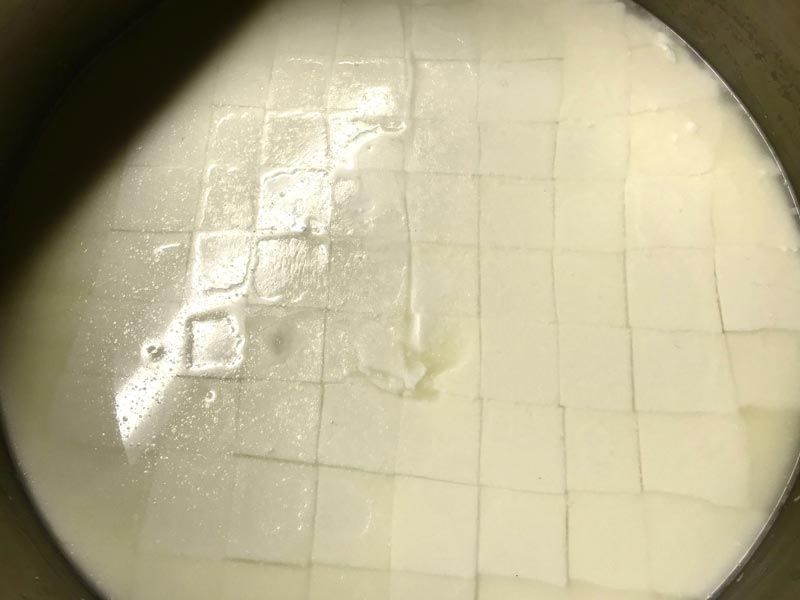
To truly master curd making, we need to delve into the fascinating science behind it. This section will illuminate the core processes that transform liquid milk into a solid, flavorful curd, focusing on protein behavior and how it relates to curd size. Understanding these principles allows for greater control and consistency in your cheesemaking endeavors.
Protein Coagulation
The initial step in cheesemaking involves protein coagulation, the process by which milk proteins clump together to form the curd. This transformation is driven by changes in the milk’s environment, leading to the formation of a solid structure.The primary protein involved in this process is casein. Casein proteins exist in milk as micelles, tiny spherical structures stabilized by electrostatic repulsion.
To coagulate the milk, we need to destabilize these micelles. This can be achieved through several methods:
- Acidification: Adding an acid, such as vinegar or citric acid, reduces the pH of the milk. This neutralizes the negative charges on the casein micelles, weakening their repulsion and allowing them to aggregate.
- Enzymatic Action: Enzymes, such as rennet (chymosin), cleave a specific peptide bond in the casein protein. This modification destabilizes the micelles, causing them to aggregate and form a gel.
- Heat Treatment: Heating milk can denature whey proteins. These denatured whey proteins can then interact with casein micelles, contributing to curd formation.
As the casein micelles aggregate, they form a three-dimensional network that traps the milk’s other components, including fat, water (whey), and lactose. This network is the initial curd. The strength and structure of this curd are influenced by factors like the type of coagulant used, the pH, and the milk’s composition. For instance, using rennet typically produces a firmer curd compared to acid coagulation.
Syneresis
Syneresis is the process by which the curd expels whey, leading to the curd’s firming and shrinking. This process is crucial for determining the final moisture content and texture of the cheese.Syneresis occurs because the casein network, initially formed, is not a perfectly stable structure. The network has some inherent instability, and the trapped water is gradually squeezed out. This is driven by several factors:
- Curd Shrinkage: As the casein network contracts, it physically squeezes out the whey.
- Protein Interactions: Interactions between the casein proteins become stronger over time, further compacting the network.
- Temperature: Higher temperatures generally accelerate syneresis.
The rate and efficiency of syneresis are significantly influenced by the curd size. The larger the curd particles, the more whey they can trap, potentially leading to a softer, moister cheese. Conversely, smaller curds allow for more efficient whey expulsion, resulting in a firmer, drier cheese.
Tools and Equipment
To achieve the perfect curd size, you’ll need the right tools. The quality of your equipment directly impacts the consistency and efficiency of the cheesemaking process. Using the correct tools, properly maintained and sanitized, ensures clean cuts and prevents unwanted bacterial contamination, ultimately influencing the final cheese texture and flavor.
Essential Tools for Cutting Curds
The following tools are fundamental for cutting curds effectively. Each plays a specific role in achieving the desired curd size and shape.
- Knives: A long-bladed, non-serrated knife is essential for making initial cuts in the curdled milk. The length of the blade allows for clean, even cuts across the entire vat. The non-serrated edge is crucial to prevent tearing the delicate curds. Examples include a chef’s knife or a specialized cheese knife.
- Curd Cutters: These tools are designed specifically for cutting curds into uniform sizes. They come in various forms, each suited to different cheese styles. The most common types include wire harps and curd knives.
- Wire Harps: Wire harps consist of a frame with tightly strung stainless steel wires. They are excellent for making precise, consistent cuts, particularly for soft cheeses. The wires are spaced according to the desired curd size.
Types of Curd Cutters and Their Suitability
The selection of a curd cutter depends largely on the cheese style you are making. Different cutters offer varying levels of precision and suitability for different curd consistencies.
- Wire Harps: Best suited for soft cheeses like Camembert and Brie, where a small curd size is desired. They produce very uniform curds, resulting in a smoother texture in the finished cheese. The spacing of the wires determines the final curd size, with smaller spacing yielding smaller curds.
- Curd Knives: These are solid blades, sometimes with serrations, designed for making larger cuts. They are often used for hard cheeses like Cheddar and Parmesan. The size and shape of the blade influence the final curd shape.
- Curd Knives with Perforations: These knives have holes in the blade, allowing whey to drain more efficiently as the curds are cut. They can be useful in the early stages of cutting.
Maintaining and Sanitizing Tools
Proper maintenance and sanitization are critical for food safety and cheese quality. Regular cleaning prevents the buildup of bacteria, which can spoil the cheese and alter its flavor profile.
- Cleaning: Immediately after use, rinse tools thoroughly with warm water to remove any milk solids. Then, wash with hot, soapy water, ensuring all surfaces are cleaned.
- Sanitizing: After cleaning, sanitize the tools to kill any remaining bacteria. Options include:
- Using a food-grade sanitizer solution, following the manufacturer’s instructions.
- Boiling the tools for a few minutes (for heat-resistant tools only).
- Drying: Allow the tools to air dry completely before storing them. This prevents the growth of mold and bacteria.
- Storage: Store tools in a clean, dry place. Consider hanging knives and curd cutters to prevent damage to the blades.
Cutting Techniques: Precision Matters
Mastering the art of cutting curds is crucial for consistent cheese production. The precision of your cuts directly impacts the final texture and moisture content of your cheese. Uneven curds cook at different rates, leading to variations in firmness and moisture retention, ultimately affecting the overall quality of the cheese. Let’s delve into the specific techniques that ensure you achieve uniform curd size.
Demonstrating the Proper Techniques
Achieving the correct curd size is dependent on several factors, including the angle of the cutting tool, the speed of the cutting motion, and the depth of the cuts. A precise approach minimizes the formation of irregular curd shapes and sizes.The angle at which you cut the curds is important. Most cheesemakers use a wire harp or curd knife, and the angle should be consistent throughout the process.
This promotes even cutting, and helps avoid creating smaller pieces. The speed should be controlled, too. Slow, deliberate cuts are better than rushed, jerky movements.The depth of your cuts should match the dimensions needed. If the recipe calls for 1/2 inch curds, your cuts should ideally be 1/2 inch deep, forming cubes or other shapes as intended.The consistency of these parameters is what gives you the best results.
Importance of Even Cuts
Uniform curd size is paramount for several reasons. It directly affects the cooking process and the final texture of the cheese.
- Consistent Cooking: Uniform curds cook at the same rate. This ensures that all curds reach the desired firmness and moisture content simultaneously, leading to a consistent cheese texture. Uneven curds will cook at different rates, creating a mixture of textures in the final product.
- Moisture Control: Evenly sized curds release whey at a consistent rate during the cooking and stirring phases. This allows for better control over the moisture content of the cheese, which is critical for its aging and flavor development. Curds that are too small will release too much moisture, resulting in a dry cheese, while curds that are too large may retain too much moisture, leading to spoilage.
- Flavor Development: Uniformity in curd size helps ensure that the cheese develops flavor evenly throughout. The surface area of the curds affects how much whey is expelled and how the cheese interacts with the cultures and enzymes, which are vital for the flavor.
- Appearance and Texture: Evenly sized curds contribute to a visually appealing cheese with a consistent texture. This is particularly important for cheeses where the curd structure is a key characteristic, such as cheddar or mozzarella.
Step-by-Step Guide for Cutting Curds with a Wire Harp
The wire harp is a common tool for cutting curds due to its efficiency and ability to produce uniform cuts. Here’s a detailed guide:
- Preparation: After the milk has coagulated and the curd has set, gently check the firmness of the curd. It should be firm enough to hold its shape but not too tough. Ensure your wire harp is clean and sanitized.
- First Cut (Vertical): Position the wire harp at one end of the vat. Slowly and steadily, draw the harp across the curd, making parallel cuts from one end to the other. Maintain a consistent distance between the cuts, usually determined by the desired curd size. The cuts should be made in one continuous motion, without stopping or jerking.
- Second Cut (Horizontal): Rotate the curd by 90 degrees. Use the wire harp to make another set of parallel cuts, perpendicular to the first set. Again, ensure consistent spacing between the cuts. This creates a grid pattern.
- Third Cut (Vertical – Second Direction): Rotate the curd again by 90 degrees. Make another set of parallel cuts, similar to the first, but in the opposite direction to the previous set.
- Fourth Cut (Horizontal – Second Direction): Rotate the curd by 90 degrees again. Repeat the cutting process with the harp. This completes the formation of the curds, typically resulting in cubes or other geometric shapes.
- Gentle Stirring: After cutting, gently stir the curds with a long-handled tool to separate them. This helps to prevent them from sticking together and ensures even cooking. Avoid aggressive stirring, as this can break the curds.
Factors Influencing Curd Size
Understanding the factors that influence curd size is crucial for achieving the desired texture and flavor in your cheese. Milk type and acidification play significant roles in determining how the curds form and how they will behave during the cheesemaking process. These factors interact in complex ways, and controlling them allows cheesemakers to tailor their approach to different cheese styles.
Milk Type and Curd Formation
The type of milk used directly impacts the composition of the curds and whey. Different milks have varying protein and fat contents, which affect the way they coagulate and the resulting curd structure.
- Cow’s Milk: Cow’s milk is the most commonly used milk for cheesemaking. It generally produces firm curds suitable for a wide variety of cheeses. The protein content is relatively high, leading to good coagulation.
- Goat’s Milk: Goat’s milk has smaller fat globules and different protein structures compared to cow’s milk. Curds formed from goat’s milk tend to be softer and more fragile. This characteristic is why many goat cheeses have a delicate, creamy texture.
- Sheep’s Milk: Sheep’s milk is richer in both fat and protein than cow’s or goat’s milk. This results in curds that are firm and rich, making sheep’s milk ideal for cheeses with a dense texture and robust flavor.
- Other Milks: The properties of other milks, such as buffalo milk or camel milk, will also influence curd formation. Buffalo milk, for example, is very high in fat, and the resulting curds will be rich and creamy.
Acidification’s Role in Curd Firmness
Acidification is the process of lowering the pH of the milk, which is essential for curd formation. This can be achieved through the use of starter cultures or direct acidification. The level of acidity impacts the firmness and texture of the curds.
- Starter Cultures: Starter cultures are microorganisms that convert lactose (milk sugar) into lactic acid. The rate of acidification, and therefore the curd firmness, depends on the type and activity of the starter culture, and the temperature of the milk. Using a mesophilic culture generally produces a moderate acidification rate, while a thermophilic culture works at a higher temperature and acidifies more rapidly.
- Direct Acidification: Direct acidification involves adding an acid, such as citric acid or vinegar, directly to the milk. This method is often used for fresh cheeses where a quick set is desired. The speed and intensity of the acidification directly impact the curd structure.
- Impact on Curd Firmness: As the pH of the milk decreases, the milk proteins (caseins) begin to denature and coagulate, forming the curd. The lower the pH, the firmer the curd. The firmness also affects the amount of whey that is expelled during the cheesemaking process.
Curd Size Recommendations for Different Cheese Styles
The ideal curd size varies significantly depending on the desired cheese style. This table provides a general guide:
| Cheese Style | Target Curd Size | Reasoning | Example |
|---|---|---|---|
| Cheddar | Small (1/4 – 3/8 inch cubes) | Smaller curds promote greater whey expulsion and a drier curd, leading to a firmer, more compact cheese. | Mature cheddar has a firm texture, which is a result of the small curd size and the subsequent pressing. |
| Mozzarella | Medium (1/2 – 3/4 inch cubes) | The larger curds retain more moisture, leading to a stretchier texture when heated. | Fresh mozzarella has a soft, pliable texture that is achieved with medium-sized curds. |
| Feta | Medium to Large (3/4 – 1 inch cubes) | Larger curds result in a more open texture and a characteristic crumbly quality. | Authentic feta cheese features a distinctive crumbly texture, which is a result of the relatively large curd size. |
| Blue Cheese | Small to Medium (1/4 – 1/2 inch cubes) | The size allows for adequate air pockets for the mold growth while also providing sufficient surface area for flavor development. | Roquefort cheese has a characteristic blue veining throughout, which is a result of the mold growth within the curd structure. |
Troubleshooting
Even with careful attention to detail, mistakes can happen during curd cutting. Identifying and correcting these errors is crucial for achieving the desired cheese texture and quality. This section addresses common issues and provides practical solutions to ensure successful cheesemaking.
Uneven Cuts
Uneven curd sizes are a frequent problem, leading to inconsistent moisture release and texture in the final cheese. This often results in a cheese that ripens unevenly or has a variable mouthfeel.To understand the problem better, here are the common causes and solutions:
- Dull Cutting Tools: A dull knife or curd cutter will tear the curd rather than cut it cleanly, resulting in irregular shapes and sizes.
- Solution: Regularly sharpen your cutting tools. A sharp knife or curd cutter is essential for clean, uniform cuts.
- Inconsistent Cutting Technique: Varying the speed or pressure during cutting can lead to uneven results.
- Solution: Practice a consistent cutting technique. Maintain a steady pace and even pressure throughout the cutting process. Try using a grid pattern and avoid pressing down too hard.
- Unevenly Set Curd: If the milk hasn’t set uniformly, the curds may be softer in some areas than others, leading to inconsistent cuts.
- Solution: Ensure the milk is properly coagulated before cutting. Check for a clean break (the surface of the curd separates cleanly when a knife is inserted and lifted) before proceeding. Allow sufficient time for coagulation.
- Incorrect Tool for the Task: Using a tool not designed for the specific type of curd can cause issues. For instance, using a wire cutter for very soft curds may lead to breakage.
- Solution: Select the appropriate cutting tool for the curd’s firmness. A wire cutter is often suitable for softer curds, while a knife is better for firmer ones.
Curds That Are Too Large
Curds that are too large retain excessive moisture, which can lead to a soft, mushy cheese that is prone to spoilage. Large curds also take longer to acidify and may not develop the desired texture.To correct this issue:
- Insufficient Cutting: If the curds are not cut small enough, they will be too large.
- Solution: Recut the curds. If the curds are already cut but too large, you may need to recut them to achieve the desired size. This can be done carefully with a knife or curd cutter.
- Coagulation Issues: If the milk coagulates too quickly or unevenly, it can affect the curd’s ability to be cut correctly.
- Solution: Monitor the coagulation process closely. Adjust the rennet amount or the coagulation time based on the specific recipe and milk type.
- Incorrect Technique: Not cutting thoroughly or deeply enough can result in large curds.
- Solution: Ensure a thorough and consistent cutting technique. Make sure the knife or curd cutter reaches the bottom of the vat and that you cut in both directions (horizontally and vertically) to create a grid.
Curds That Are Too Small
Curds that are too small can lose moisture too quickly, resulting in a dry, crumbly cheese. Excessive moisture loss can also affect the cheese’s ability to age properly and develop flavor.Here are some possible solutions:
- Over-Cutting: Cutting the curds too small will result in excessive moisture loss.
- Solution: Be mindful of the cutting time and technique. Avoid over-cutting, especially with soft curds. Adjust the cutting time according to the recipe.
- Excessive Agitation: Over-stirring the curds after cutting can cause them to break down further and become too small.
- Solution: Handle the curds gently after cutting. Avoid excessive stirring or agitation.
- Incorrect Recipe or Ingredients: The recipe may call for a curd size that is too small for the specific cheese being made.
- Solution: Follow the recipe instructions precisely. If using a new recipe, start with a small batch to test the curd size and adjust accordingly for future batches.
Determining the Right Curd Size
Before proceeding with further cheese-making steps, it’s crucial to assess whether the curds are the correct size. The ideal size will depend on the type of cheese being made.
- Visual Inspection: Observe the curds. They should be relatively uniform in size and shape.
- Example: For a cheddar cheese, curds might resemble small, uniformly sized cubes. For a soft cheese, they might be more irregular.
- Feel Test: Gently squeeze a small handful of curds. They should feel firm but not hard.
- Example: If the curds are too soft, they may still have too much moisture. If they are too hard, they may have lost too much moisture.
- Sink Test: Drop a small handful of curds into a glass of water. Observe how quickly they sink.
- Example: Curds that sink slowly or float indicate they are retaining too much moisture. Curds that sink quickly might be too dry. This test helps in determining moisture content.
- Recipe Guidance: Refer to the cheese recipe. It should provide guidance on the ideal curd size for that specific type of cheese.
- Example: Recipes often specify curd size in terms of the dimensions, like 1/4 inch cubes. Following the recipe is crucial for success.
Specific Cheese Styles: Curd Size Guidelines
Understanding how curd size impacts cheese characteristics is essential for cheesemaking. Different cheese styles require specific curd sizes to achieve their desired textures, flavors, and moisture contents. This section provides curd size recommendations for popular cheese styles and explains how these sizes influence the final product.
Cheddar Cheese Curd Size and Impact
Cheddar cheese production involves a unique approach to curd handling. The size of the curds significantly influences cheddar’s texture and flavor development.The curd size for cheddar cheese is typically:
- Small to Medium: After the initial cut, the curds are relatively small, often around 1/4 to 3/8 inch (6-10 mm) in size. This size facilitates efficient whey expulsion during the cheddaring process.
This small size promotes a tighter curd structure, leading to a firmer, more compact cheese. The cheddaring process, where the curds are stacked and turned, further contributes to this texture. The small curd size also allows for better acid development, which is critical for cheddar’s characteristic tang. A smaller curd surface area allows more efficient acid production, contributing to the sharp, complex flavors associated with cheddar.
Mozzarella Cheese Curd Size and Impact
Mozzarella, known for its stretch and melt, relies on a specific curd size to achieve its desirable properties.The curd size for mozzarella cheese is generally:
- Medium: Typically, the curds are cut to a medium size, around 1/2 inch (12 mm).
This size allows for proper whey expulsion while retaining enough moisture for stretching. The subsequent steps, such as stretching and kneading the curds in hot water, align the proteins and give mozzarella its signature elasticity. If the curds are too small, they can become overly dry and lose their stretch. If the curds are too large, the final cheese might be crumbly and difficult to stretch.
The curd size directly impacts the final moisture content and, consequently, the cheese’s melting behavior.
Blue Cheese Curd Size and Impact
Blue cheese, with its distinctive veining and pungent flavor, requires a specific curd size and handling to encourage mold growth.The curd size for blue cheese is typically:
- Medium to Large: The curds are cut to a medium to large size, often around 1/2 to 3/4 inch (12-19 mm).
This larger curd size creates more open spaces within the cheese, allowing thePenicillium roqueforti* mold to grow and create the characteristic blue veins. The larger curds also retain more moisture, which is essential for mold development. The texture of blue cheese is significantly influenced by the curd size. The larger the curds, the more open the structure and the softer the cheese.
The flavor of blue cheese is also influenced by curd size. The mold growth is directly linked to the open structure, which is influenced by curd size, determining the intensity of the cheese’s flavor profile.
Post-Cutting Procedures: Handling and Stirring
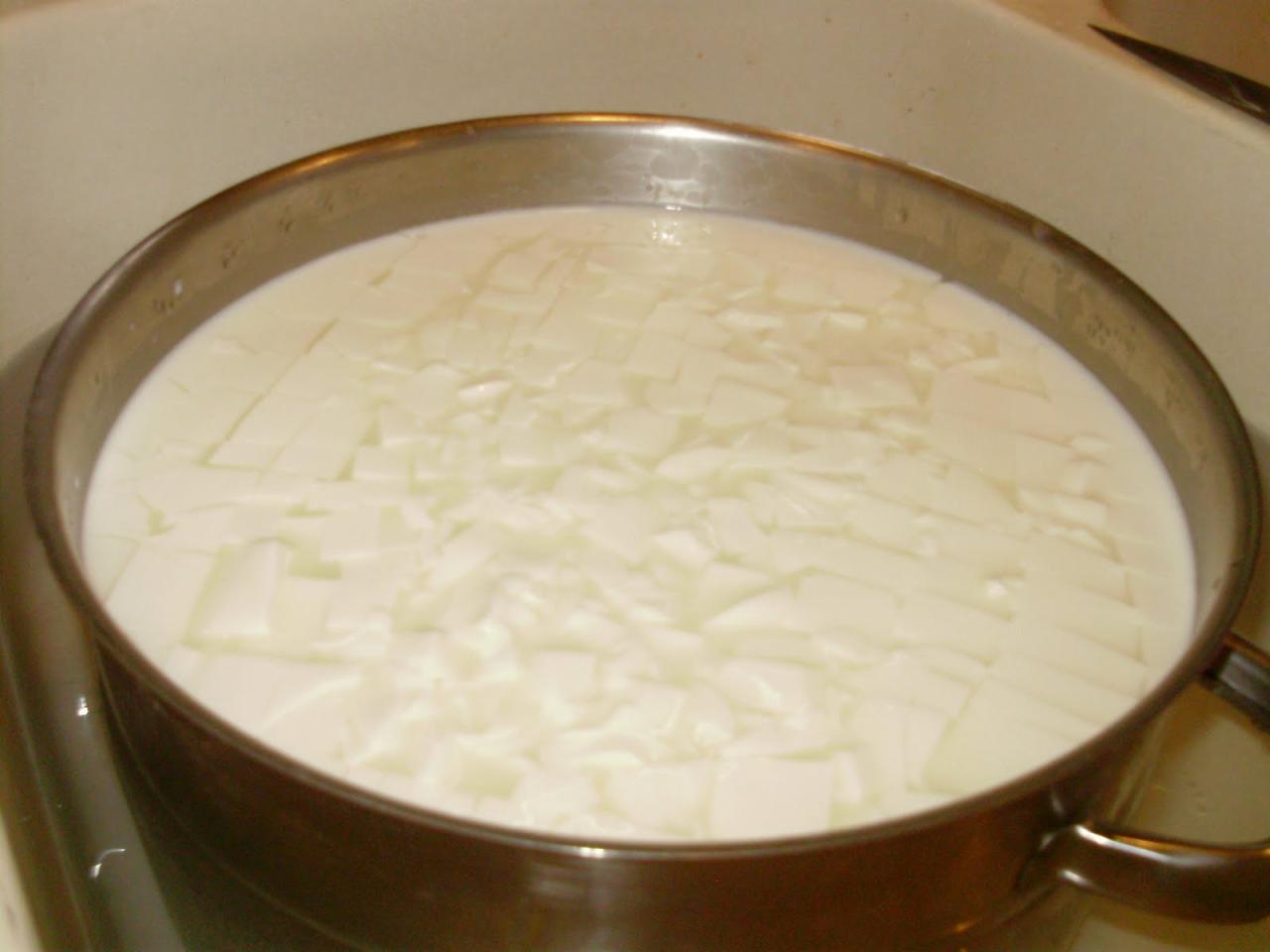
After the precise cut, the curds are delicate and the next steps are crucial for determining the final cheese texture and moisture content. Gentle handling and proper stirring techniques are essential to prevent curd breakage and promote the desired characteristics in the finished cheese. This phase significantly influences the cheese’s ability to retain or expel whey, which in turn affects its firmness, acidity, and overall quality.
Gentle Handling of Curds
The newly cut curds are fragile and susceptible to damage. Rough handling can lead to excessive fines (small, broken curd pieces) and an uneven texture in the final product. Minimizing agitation during the initial stages is paramount.To protect the curds:
- Use a gentle scooping or lifting motion when transferring curds.
- Avoid using excessive force or speed during any handling steps.
- If the curds need to be moved, do so slowly and carefully, ensuring the curds are not compressed.
Proper Stirring Techniques
Stirring is the most important procedure in post-cutting. It plays a critical role in several key processes: whey expulsion, curd firming, and the development of the cheese’s final texture. The stirring technique and duration vary depending on the cheese style, but the core principles remain consistent.The goals of stirring include:
- Whey expulsion: Stirring encourages the curds to release whey, reducing the moisture content and increasing the acidity.
- Curd firming: Agitation causes the curds to rub against each other, promoting the development of a firmer texture.
- Temperature control: Stirring helps to distribute heat evenly throughout the curd mass, facilitating the desired enzymatic reactions and firming process.
Stirring should be consistent, ensuring all curds are exposed to the whey and the heating element (if used). The speed and intensity of stirring depend on the cheese being made.
Stirring Procedures for Cheddar Cheese:
Cheddar cheese production involves specific stirring protocols to achieve its characteristic firm texture and moisture content. These procedures are critical to the overall success of the cheese.
- Initial Stirring (After Cutting): Immediately after cutting, stir the curds gently and continuously for 5-10 minutes. This prevents the curds from matting together.
- Gradual Heating: Gradually increase the temperature of the curd mass, stirring continuously to ensure even heat distribution. The target temperature and heating rate vary depending on the cheesemaker’s specific recipe and desired outcome.
- Stirring During Heating: Maintain continuous stirring throughout the heating process. The speed and intensity of stirring should be adjusted to prevent the curds from sticking to the vat and to ensure uniform heating.
- Final Stirring (After Heating): Once the target temperature is reached, continue stirring for a period of time, as specified by the recipe. This allows the curds to further firm up and expel whey.
Visual Aids
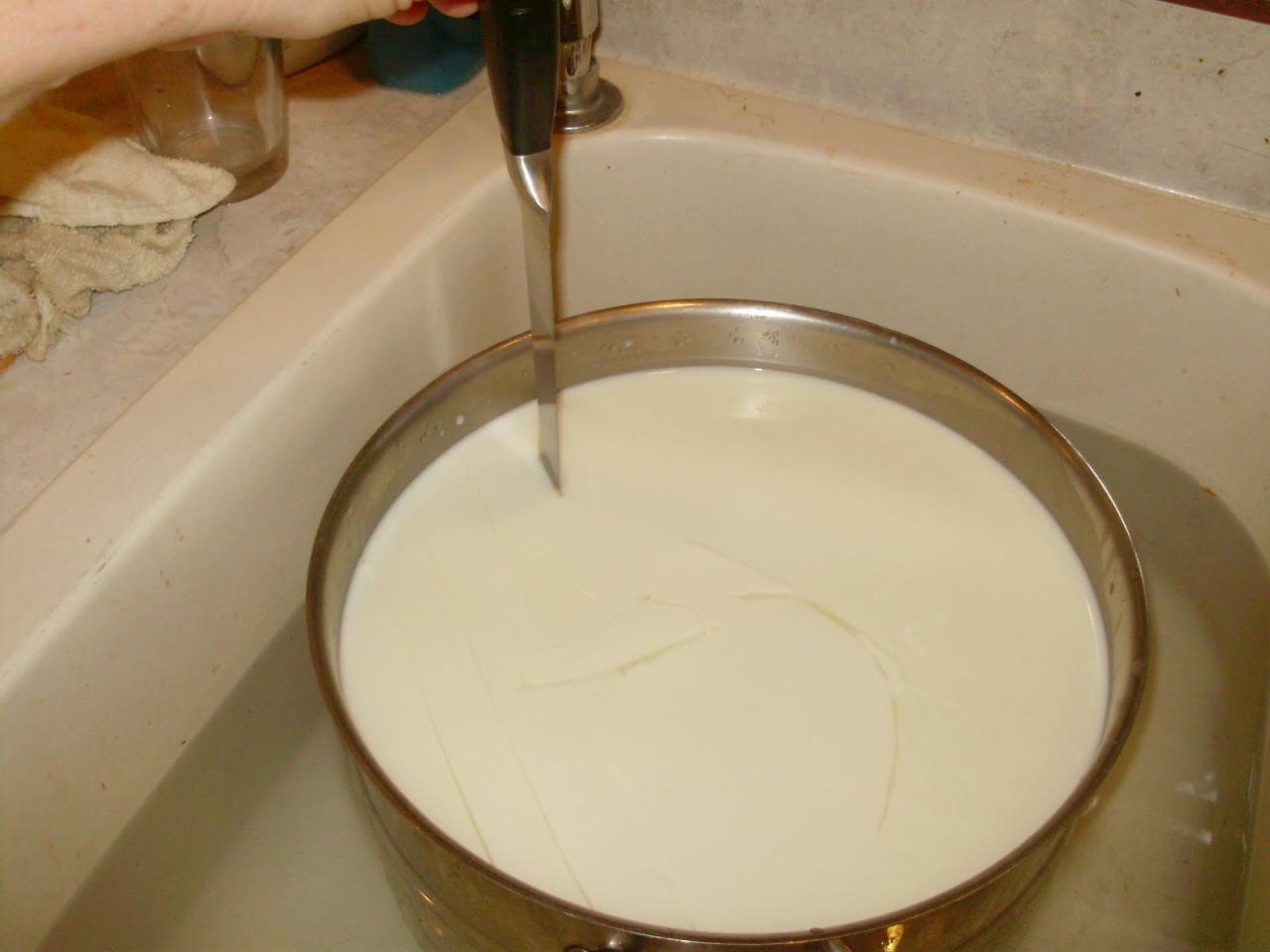
Visual aids are crucial for understanding the impact of curd size on cheese making. Seeing the differences firsthand can significantly improve your ability to assess and adjust your techniques. Let’s explore some illustrative examples to solidify your understanding.
Perfectly Cut Curds: Uniformity and Shape
Imagine a close-up photograph of perfectly cut curds. They are uniformly sized, appearing as small, even cubes or granules, depending on the cheese style.The image showcases curds that are remarkably consistent in both size and shape. Each curd is a near-perfect cube or, for some cheese types, a consistent sphere or irregular shape, all of which reflect the intended curd size for that specific cheese.
The uniformity is immediately apparent; there are no significantly larger or smaller pieces. The edges of the curds are relatively clean, indicating a precise cut and minimal shattering. The overall appearance is neat and professional, suggesting a well-executed curd cutting process. This visual example highlights the importance of precision in achieving the desired texture and moisture content in the final cheese product.
This precision contributes directly to the even release of whey and consistent aging characteristics.
Curd Size Comparison: Too Large vs. Too Small
Consider a side-by-side comparison illustrating the visual differences between curds cut too large and too small.The first part of the image shows curds that are significantly larger than the ideal size. These curds might be irregular in shape, with jagged edges. The whey release would be uneven, potentially leading to a cheese with a coarse, uneven texture and possibly trapped moisture.
The curds appear clumpy and loosely packed, indicating that the cutting process was not precise. In contrast, the second part of the image displays curds that are much smaller than the ideal size. These curds might be broken and fragmented. The whey would drain too quickly, leading to a cheese that is too dry. These curds appear dusty and disorganized.
The comparison clearly demonstrates the detrimental effects of improper curd size on the cheese-making process.
Cheese Texture: Curd Size Influence
An image effectively illustrates the relationship between curd size and cheese texture. This image depicts the visual differences in texture across various cheese styles.The image could feature three distinct cheese samples: a firm cheddar, a creamy brie, and a crumbly feta. The cheddar, with its firmer texture, would have been made with relatively smaller curds, resulting in a tighter protein matrix and a less moist interior.
The brie, on the other hand, would showcase a smoother, more spreadable texture, indicative of larger curds that retained more moisture during the cheesemaking process. The feta, characterized by its crumbly nature, would have been made with curds of a medium size, contributing to its distinctive texture. The visual comparison effectively highlights how curd size directly impacts the final texture of the cheese.
Last Point
From understanding the fundamental role of curd size to mastering cutting techniques, this exploration of “How to Cut the Curds to the Right Size and Why It Matters” provides a comprehensive look at this essential step in cheesemaking. Armed with this knowledge, you can confidently craft cheeses with the desired texture, moisture content, and flavor profile. Now, go forth and make some amazing cheese!